Article Content
Pagoda architecture, created by the Korean ancestors, is one of the nation’s precious cultural heritages.
This architecture with a long history was developed from wooden pagoda to stone pagoda gradually.
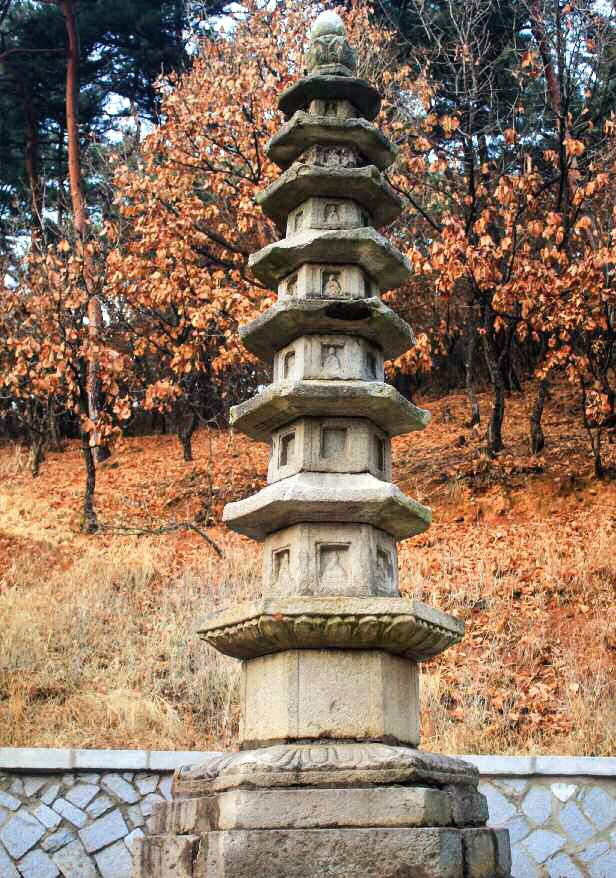
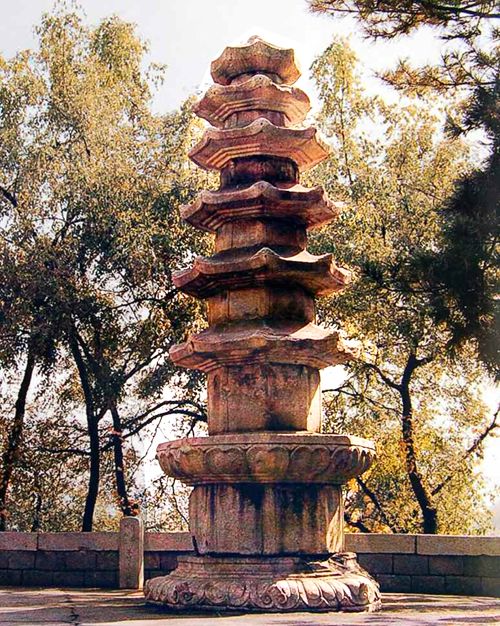
Wooden or stone pagoda consists of platform, body and head. It is peculiar that the body part is formed the gradation in size from its lower part to upper part.
Stone pagoda came into being for the first time at the close of the period of the Three Kingdoms. It became the main form in Korean pagodas as it was easier to build and longer to stand than wooden one.
Most of the old pagodas are rectangular ones, and there are also octagonal and hexagonal pagodas and multi-angular ones.
In general, pagodas dating back to Koguryo Kingdom are octagonal ones.
In the periods of Koryo (918-1392), octagonal pagodas had been built one after another in Pyongyang and other areas that belonged to Koguryo Kingdom in the past.
Typical are a five-storied octagonal pagoda at Yongmyong Temple, a seven-storied hexagonal pagoda at Hongbok Temple and a nine-storied rectangular pagoda and a 13-storied octagonal pagoda at Pohyon Temple.
Pagoda architecture was registered as a national intangible cultural heritage.